A Year in Review – 2025 Wrapped | Fixed Income Update

For our final Fixed Income update of 2025, we are highlighting several notable events and how they shed insight onto our prospective on credit markets in 2026.
The Federal Reserve’s (“Fed”) decision to cut interest rates at its final meeting of the year and commentary around policy decisions for 2026 is the headliner of 2025. The Fed cut rates three times in 2025, bringing the Federal Funds Rate to a range of 3.50% – 3.75%. After remaining on pause for most of the year, the Fed began easing in September. Despite periods of volatility and shifting expectations, the year ultimately ended in line with the Fed’s original projection for three rate cuts.
Searching for 4%
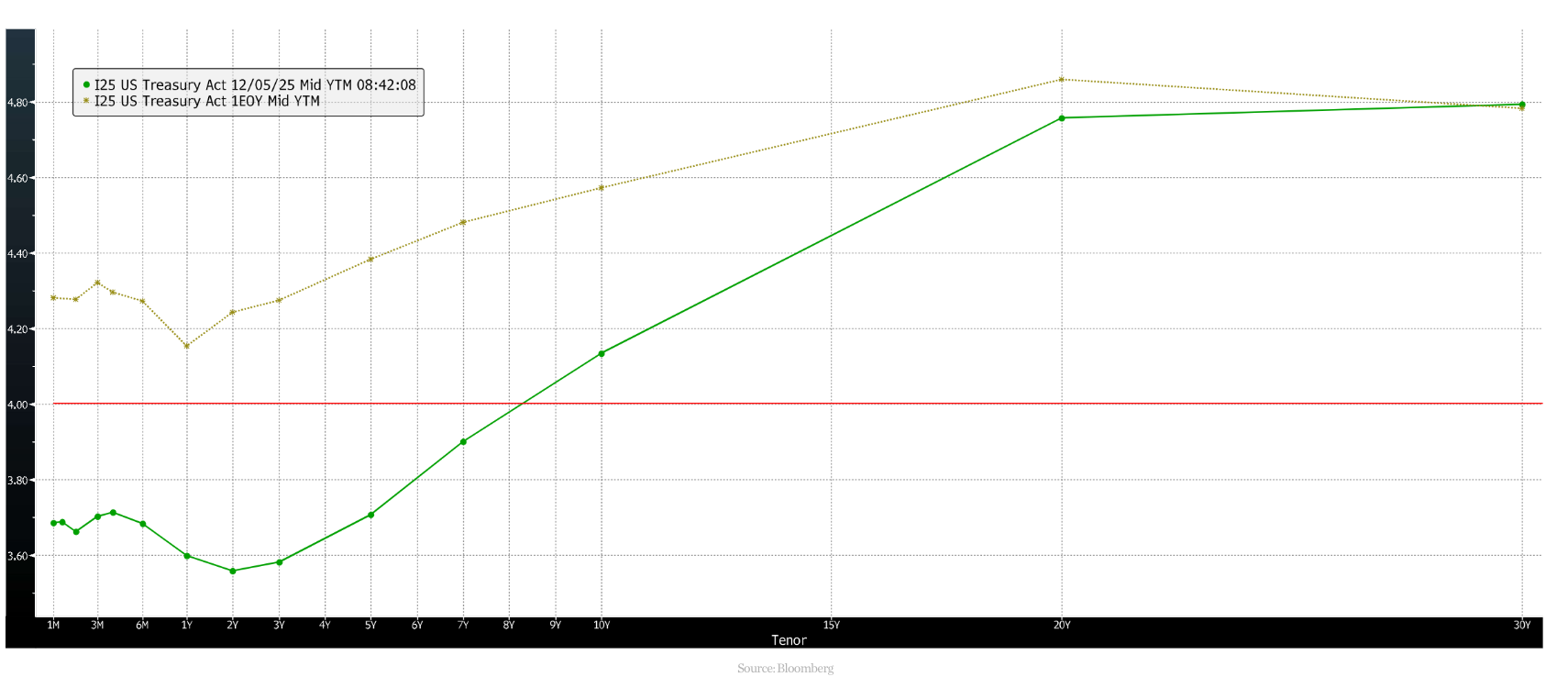
At the beginning of the year, we anticipated that short-term rates would decline as the Fed moved toward potential rate cuts. Our strategy of extending the duration of your holdings has worked out very well. Over the course of the year prediction has played out, and we now see Treasuries with maturities of seven years and under trading below 4% (green line on chart below). For example, the 2-year Treasury is currently yielding around 3.5% and the 5-year around 3.70%. This stands in stark contrast to last year (yellow line), when nearly all Treasury rates were above 4%. Long-term Treasuries rates have not experienced this general decline and have remained anchored above 4% (red line). One factor for longer rates remaining elevated is inflation expectations running “hotter” than the Fed’s objective of 2%. It is certainly becoming more challenging to lock in yields above 4%, and this trend is likely to continue, particularly if inflation expectations lessen or economic conditions weaken.
Financing the Future with Bonds – A Banner Year for Issuance
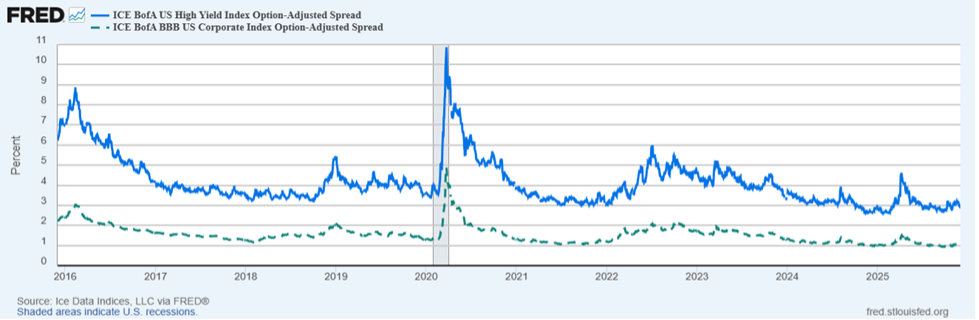
Market conditions have been favorable for corporations issuing debt this year. While yields have come down from their highs, they remain at attractive levels, supporting strong demand for newly issued corporate bonds. Credit spreads also remain very tight, which benefits issuers by allowing them to secure more favorable pricing as they come to market. Typically credit spreads widen during periods of economic uncertainty or market stress, as investors require higher yields to compensate for increased perceived risk. We saw spreads spike in 2020, but they have maintained a tighter trading range since 2021.
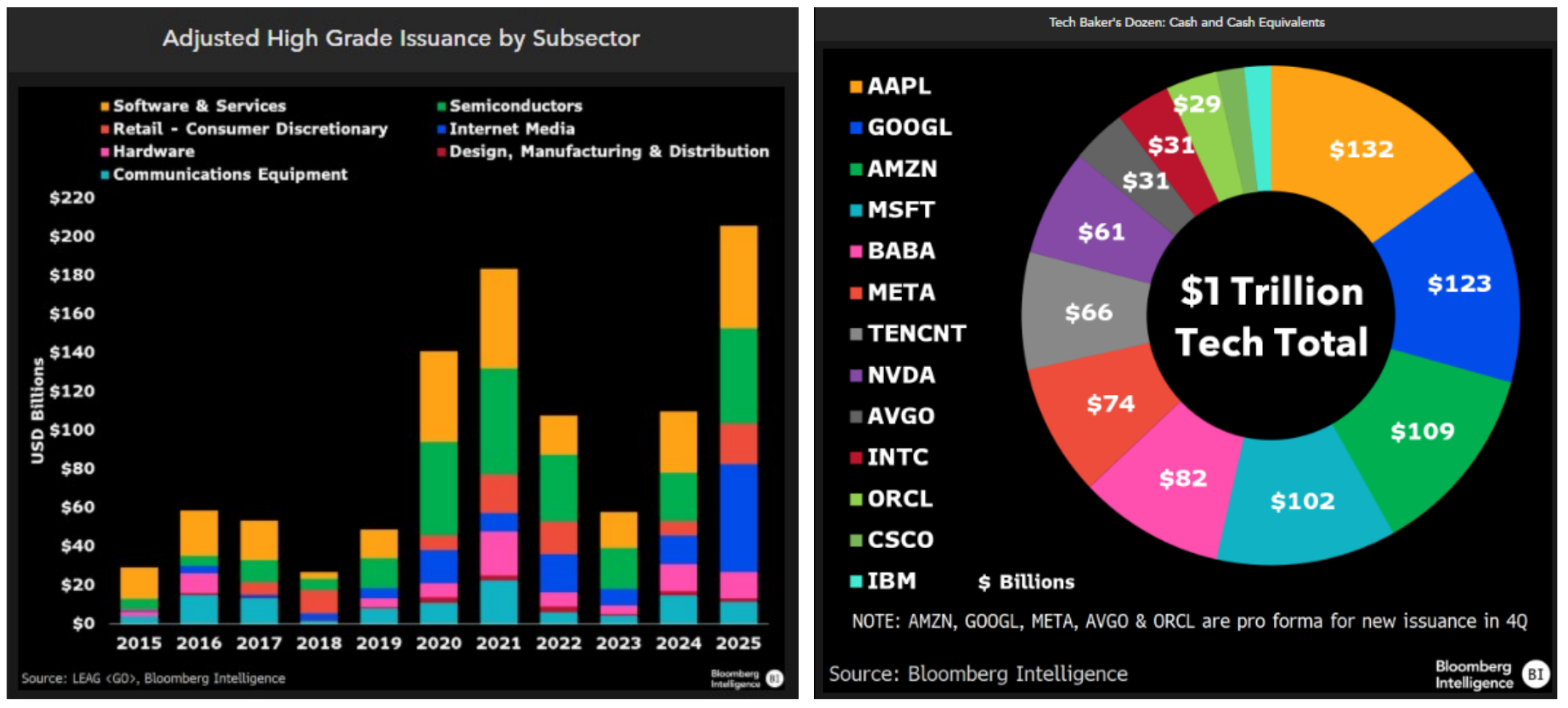
2025 has been a banner year for new issuance, as many high-grade technology companies have rushed to the market to issue bonds to help fund AI initiatives, cloud infrastructure, and data center expansion. Companies such as Meta, Google, and Amazon have all tapped the bond market this year to support their financing needs. Although this wave of issuance has raised concerns for some investors, overall credit metrics for high-grade issuers remain solid as the biggest issuers of debt have both the balance sheet strength and the cash flow to support financing costs. The greater risk appears to be potential credit-rating downgrades rather than any meaningful risk of default. Tech companies collectively hold more than a trillion dollars in cash, providing ample liquidity. This can be seen as a bullish signal, suggesting that continued investment may have a positive impact on the broader economy.
2026 on Deck
As the year comes to a close, our focus shifts towards strategy for the year ahead. The market is currently pricing in one to two interest rate cuts next year, while the median projection for members of the Fed is one cut. At their December meeting, there were three dissents: two against a cut and another for a larger cut. It appears that there is a growing number of Fed members with varying viewpoints, which may make it harder for the next Fed chair to gain unanimity among FOMC participants. Fed chair Jerome Powell has been in office since 2018 and is likely to be replaced in May of next year. We look forward to writing a deeper dive on this topic in 2026!
We continue to believe it is a good time to lock in rates, as yields may move lower in the new year. The front end of the yield curve could decline further if the Fed cuts rates or if the market begins to price in additional easing. Should economic conditions deteriorate, longer-term rates could also fall below 4%. We saw this briefly with the 10-year Treasury before it subsequently recovered. Locking in rates now can help protect portfolios against future declines in yield.
We help mitigate reinvestment risk and provide predictable income by laddering maturities (staggered maturity dates) in the fixed income portion of your portfolio. This approach aims to ensure that you are locking in rates at historically attractive levels while limiting the amount of capital maturing at any single point of the interest-rate cycle. If you have a significant amount of cash sitting in money market funds or short-term bond investments, you may want to consider extending the duration of your portfolio. Please contact your Private Client Advisor to learn more about solutions tailored to your specific situation.
We hope you find this Fixed Income Update helpful, and feel free to share it with your colleagues, family, and friends. Please let us know if you have experienced any changes in your finances or have questions about your portfolio.
If you have a friend or family member who would be interested in a no-cost portfolio review, please let us know.
Thank you again for your continued vote of confidence in our work. Wishing you a happy and healthy holiday season!
Watch
Listen