CNN | AI is about to face an enormous test. The market is already nervous

New York —Growing concerns about an artificial intelligence bubble have, in large part, caused the stock market’s recent bout of volatility. So the AI industry will face an enormous test when Nvidia, the world’s most valuable company and backbone of the AI boom, reports earnings after the bell on Wednesday.
The stock market rally — that had been going practically nonstop since April until this month’s blip — largely depends on Nvidia. The chipmaker, which is the gold standard for AI computing power, has propelled the market higher across the past three years.
Investors are now eager to know whether demand for Nvidia’s chips — and its optimism about the future — are continuing to grow or if there are signs of AI fatigue.
Earnings this month from tech company Palantir (PLTR), which uses AI for its government contracts, beat Wall Street’s estimates. However, concerns about the stock’s expensive valuation and nerves about a bubble gave investors pause — and fueled a sell-off in AI stocks over the past several weeks. Nvidia’s stock (NVDA) has fallen more than 8% this month, although it’s still up 37% this year.
“The market for the first time is questioning whether the hype will turn into reality,” Bob Elliott, CIO at asset management firm Unlimited Funds, told CNN.
Nvidia’s chips power part of practically every major AI venture, meaning investors will scrutinize its earnings as well as chief executive Jensen Huang’s remarks.
“Nvidia takes on even greater weight than normal,” Elliott said. “If it doesn’t confirm high expectations built into the market, then watch out below.”
Market-moving earnings
Every investor should care about Nvidia’s earnings this afternoon: Nvidia accounts for roughly 8% of the S&P 500, which is weighted by market value. That means investors — and those with 401(k)s — are increasingly exposed to the company’s strong gains. Similarly, they are more exposed to a drop in Nvidia’s stock price.
As of Tuesday, Nvidia shares’ gains have accounted for 18% of the S&P 500’s total return this year, according to Howard Silverblatt, senior index analyst at S&P Dow Jones Indices.
Since Nvidia last reported earnings in August, concerns have been rising about circular financing, with tech companies entwined in a massive web of extraordinarily lucrative deals.
Now nerves are fraying about whether the money being poured into the AI boom will be justified. On top of that, tech stocks have become relatively expensive.
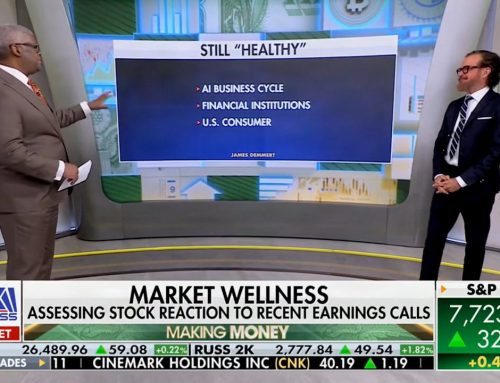
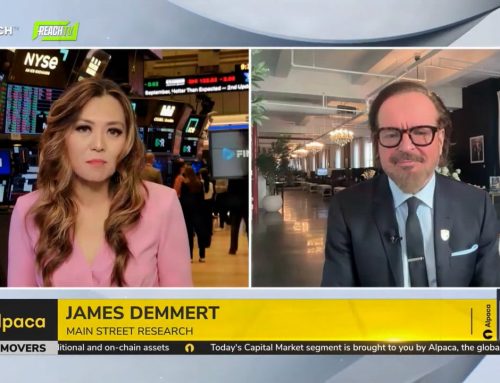
“Nvidia’s earnings on Wednesday are particularly important given the rising skepticism regarding the longevity of the AI cycle and current AI stock valuations,” James Demmert, CIO at Main Street Research, said in an email. “Anything less than a stellar report and outlook could make stock indexes vulnerable.”
And it’s bigger than just Wall Street. There are concerns that the AI boom — which has helped boost US economic growth this year — is now masking signs of weakness in the economy.
At its market value of $4.4 trillion, Nvidia is currently larger than every country’s economy except the United States, China and Germany.
Nvidia’s fate is interlinked with other big tech companies that depend on its products. A sign of a slowdown in demand could signal that the other tech companies are less confident about the AI buildout.
Some Wall Street analysts are optimistic that Nvidia will continue to deliver impressive earnings. AI chatbots like ChatGPT — and the data centers powering AI — depend on the company’s chips. It’s the foundation of the current AI wave.
“That is why everyone listens to every word that Jensen Huang has to say, because it’s a good gauge of the health of the AI ecosystem,” said Angelo Zino, a tech analyst at CFRA Research.
Disclosures: Main Street Research LLC (“MSR”) is an SEC registered investment adviser; however, this does not imply any level of skill or training, and no inference of such should be made. The opinions expressed herein are as of the date of publication and are provided for informational purposes only. Content will not be updated after publication and should not be considered current after the publication date. We provide historical content for transparency purposes only. All opinions are subject to change without notice and, due to changes in the market or economic conditions, may not necessarily come to pass. Mention of a security should not be considered a recommendation or solicitation to purchase or sell the security, and any securities mentioned may be held by MSR for client portfolios. The information posted represents an opinion as of the date published and should not be considered an investment recommendation. MSR does not become a fiduciary to any reader or other person or entity by the person’s use of or access to the material. The reader assumes the responsibility of evaluating the merits and risks associated with the use of any information or other content and for any decisions based on such content. Investment disclosure —neither the information nor any opinion expressed herein constitutes a solicitation by main street of the purchase or sale of any securities or other financial instruments nor a recommendation to hold, sell, buy, or own a particular security or sector in your portfolio and do not represent all securities purchased, sold or recommended for client accounts. The listener should not assume that an investment in these securities has been or will be profitable. Individual recommendations are tailored to individual portfolios. Main street client portfolios are managed separately and vary in regard to risk and return dependent upon individual client circumstances. A full list of all securities in the MSR client portfolio is available upon request.